
If you are considering orthodontic treatment to straighten your smile, you may be wondering whether Invisalign® or traditional braces is the better choice for you. Both treatments are designed to straighten teeth, improve bite alignment, and support long-term oral health. However, they work in different ways and offer unique advantages depending on your needs, lifestyle, and treatment goals.
Straight teeth are not only aesthetically appealing but can also be easier to clean and maintain. Choosing between Invisalign and traditional braces often comes down to factors such as appearance, treatment complexity, convenience, and cost. Understanding the differences can help you make a more informed decision when discussing your options with your dentist or orthodontist.
Understanding Invisalign® and Traditional Braces
Both Invisalign and traditional braces gradually move teeth into their desired positions using controlled pressure. The primary difference lies in how that pressure is applied.
Traditional braces use brackets attached to the teeth and connected by wires that are periodically adjusted throughout treatment. Because they remain fixed to the teeth, they continuously apply pressure and do not rely on patient compliance for effectiveness.
Invisalign treatment uses a series of custom-made clear aligners that fit snugly over the teeth. Each set of aligners is designed to make small adjustments to tooth position before progressing to the next set in the series.
Both Invisalign braces and traditional metal braces can successfully correct many orthodontic concerns, including crowding, spacing issues, and certain bite problems. The most appropriate treatment depends on the complexity of your case and your commitment to following treatment recommendations.
Invisalign® vs Braces: Comparing Appearance and Comfort
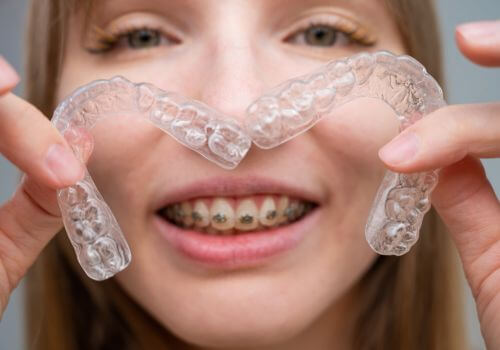
One of the most common reasons patients choose Invisalign or other clear aligners is their discreet appearance. The clear aligners are designed to be nearly invisible when worn, making them a popular option among teens and adults who want a less noticeable orthodontic treatment.
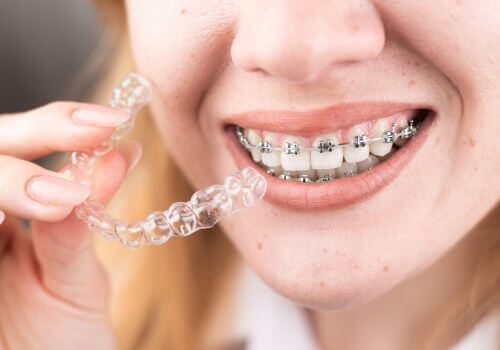
Traditional braces are more visible because they use metal brackets and wires attached to the front surfaces of the teeth. While many younger patients enjoy selecting colorful elastic bands, some adults prefer a treatment option that blends in more naturally with their smile.
Comfort Considerations
Both treatment options involve an adjustment period as teeth begin moving. Patients may experience mild soreness or pressure after receiving braces or switching to a new set of aligners.
Invisalign aligners have smooth plastic surfaces that may reduce irritation to the cheeks and lips. Traditional metal braces can sometimes cause temporary irritation from brackets or wires, especially during the early stages of treatment.
Comfort levels vary from person to person, and both treatments are generally well tolerated when managed under professional supervision.
Effectiveness and Treatment Time
When comparing Invisalign vs braces, effectiveness is often one of the most important considerations. Both systems can successfully straighten teeth, but certain orthodontic issues may respond better to one treatment than the other.
Traditional braces are often recommended for more complex cases involving severe crowding, significant tooth rotation, major bite discrepancies, or teeth that require substantial movement. Because braces remain attached to the teeth at all times, they provide consistent force throughout treatment.
Invisalign can effectively address many mild to moderate orthodontic concerns and some more complex cases when treatment is carefully planned. However, success depends heavily on patient compliance.
The American Association of Orthodontists recommends wearing clear aligners for approximately 20 to 22 hours per day to achieve the intended tooth movement. Patients who frequently remove their aligners or forget to wear them may experience longer treatment times.
| Factor | Invisalign® | Traditional Braces |
|---|---|---|
| Visibility | Nearly invisible | Noticeable metal brackets and wires |
| Removability | Removable | Fixed in place |
| Complex Cases | May treat many cases | Often preferred for severe cases |
| Patient Compliance | Very important | Less dependent on compliance |
| Food Restrictions | Minimal when aligners are removed | Certain foods should be avoided |
Daily Convenience and Oral Hygiene
Many patients appreciate the flexibility that Invisalign offers. Because the aligners are removable, you can take them out when eating, brushing, and flossing. This allows you to continue enjoying many of your favorite foods without worrying about damaging brackets or wires.
However, removable aligners also require responsibility. Aligners should be removed before meals and stored properly to avoid loss or damage. Patients must also remember to place them back in their mouths promptly after eating.
Keeping Teeth Clean During Treatment
Good oral hygiene remains essential regardless of which treatment you choose. Proper brushing and flossing help protect against cavities and gum disease while your teeth are moving.
With Invisalign, patients remove their aligners before cleaning their teeth. The aligners themselves should also be cleaned regularly using products recommended by your dental professional.
Patients with traditional braces must take extra care to clean around brackets and wires. Special orthodontic brushes, floss threaders, or water flossers may help remove food particles and plaque from hard-to-reach areas.
Maintaining consistent oral hygiene habits throughout treatment can help ensure healthier teeth and gums when your orthodontic treatment is complete.
Invisalign® Cost vs Traditional Braces Cost
Cost is often a major factor when comparing orthodontic treatments. Many patients ask questions such as "How much is Invisalign?" or "How much does Invisalign cost compared to traditional braces?"
The answer varies depending on several factors, including the complexity of your case, the length of treatment, geographic location, and whether additional procedures are needed.
In some cases, traditional braces cost less than Invisalign treatment. However, treatment fees can overlap significantly depending on the individual patient. Because Invisalign cost is often based on the number of aligners and treatment complexity, there is no universal price that applies to every situation.
Dental insurance plans that include orthodontic benefits may help offset the cost of Invisalign or traditional braces. Your dental team can review your coverage and provide a detailed treatment estimate during your consultation.
How to Choose Between Invisalign® and Traditional Braces
The decision between Invisalign and traditional braces should be based on your specific orthodontic needs, lifestyle, and treatment goals. Some patients prioritize a discreet appearance and appreciate the flexibility of removable aligners. Others may benefit from the consistent force and reliability of traditional metal braces.
If you are researching Invisalign near me or exploring orthodontic treatment for your child, the best first step is scheduling a consultation with a qualified dental professional. A comprehensive examination can help determine which treatment option is most likely to provide safe, predictable, and long-lasting results.
Both Invisalign and traditional braces have helped millions of patients achieve healthier, straighter smiles. With professional guidance and a personalized treatment plan, you can confidently choose the option that best fits your needs.
If you have questions, we would love to answer them for you. Please give us a call at the office at (204) 817-6768, or you can email us at [email protected]. Our staff would love to talk with you!
Don't forget to follow us on social media Facebook, Instagram.